
Last updated November 15, 2026
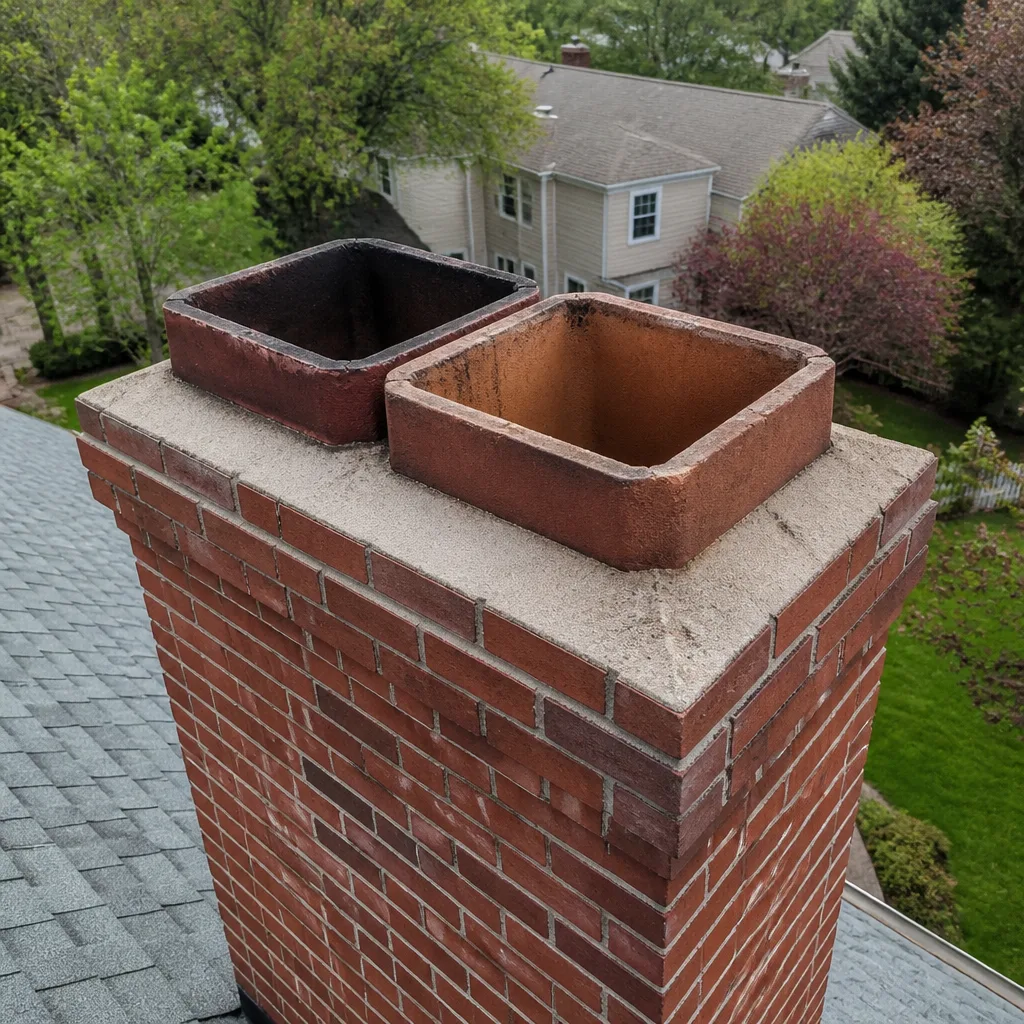 Sweep & inspection
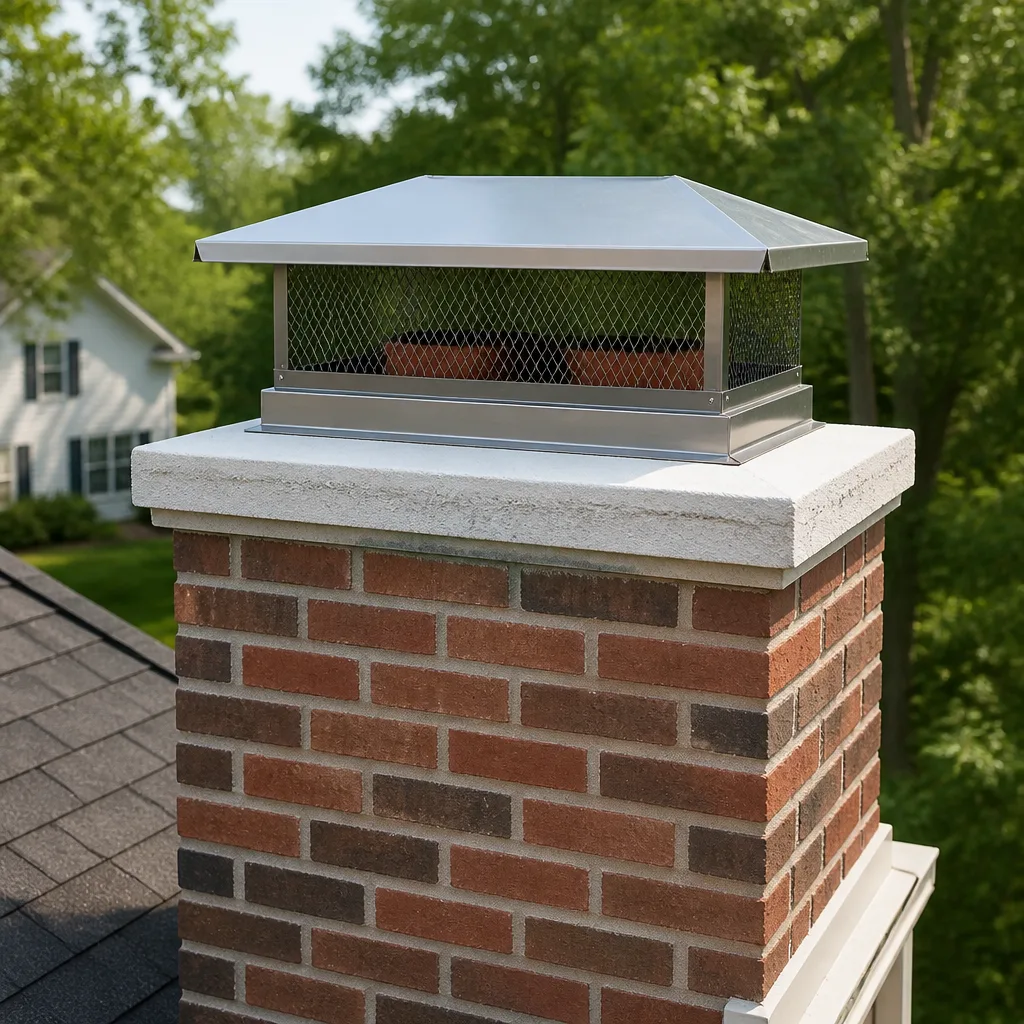 Caps & crowns
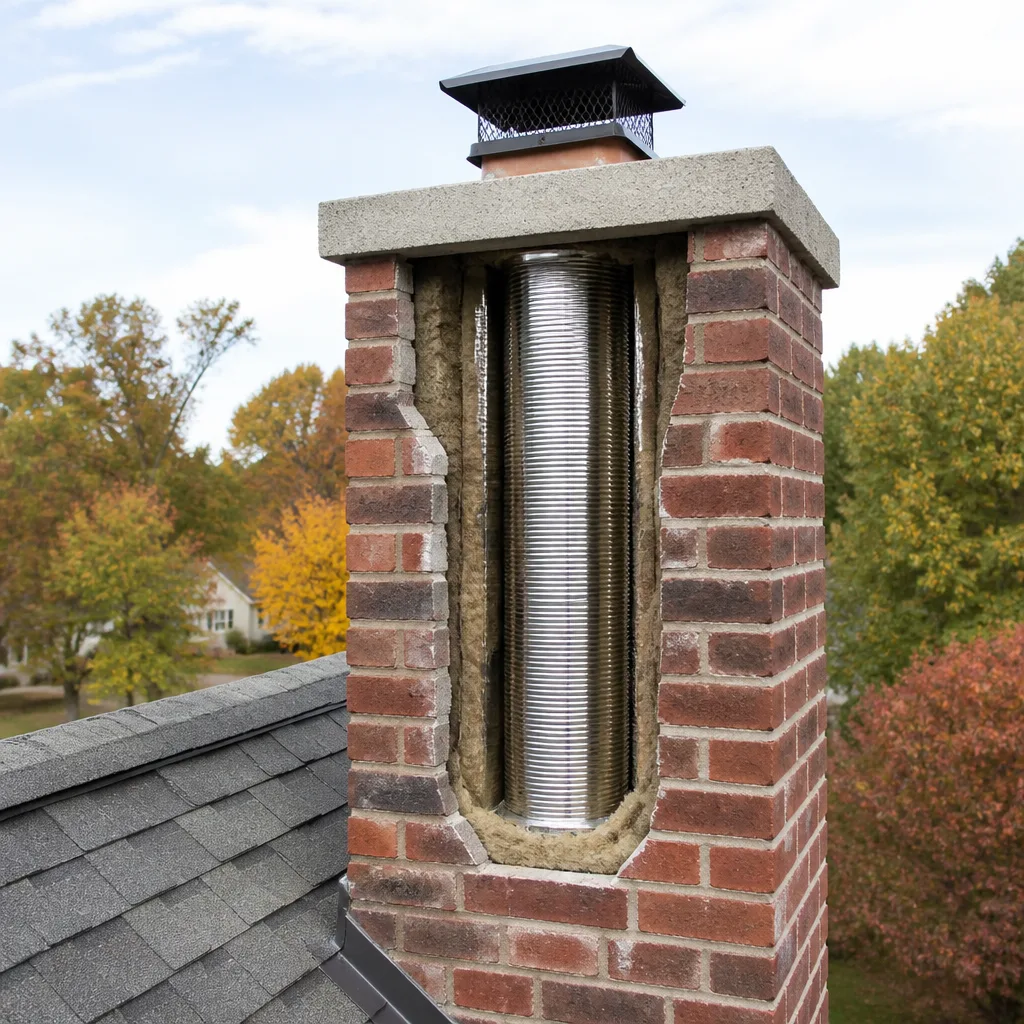 Flue relining
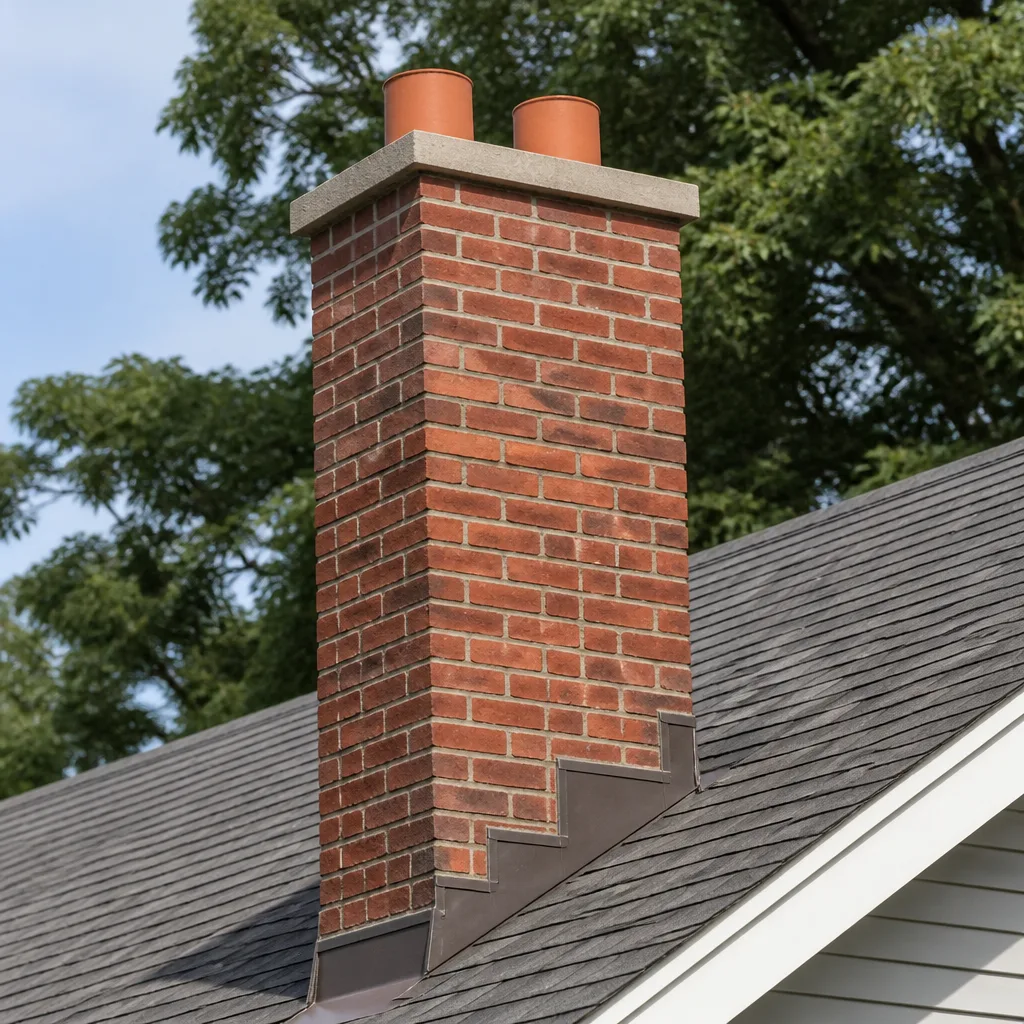 Masonry repair
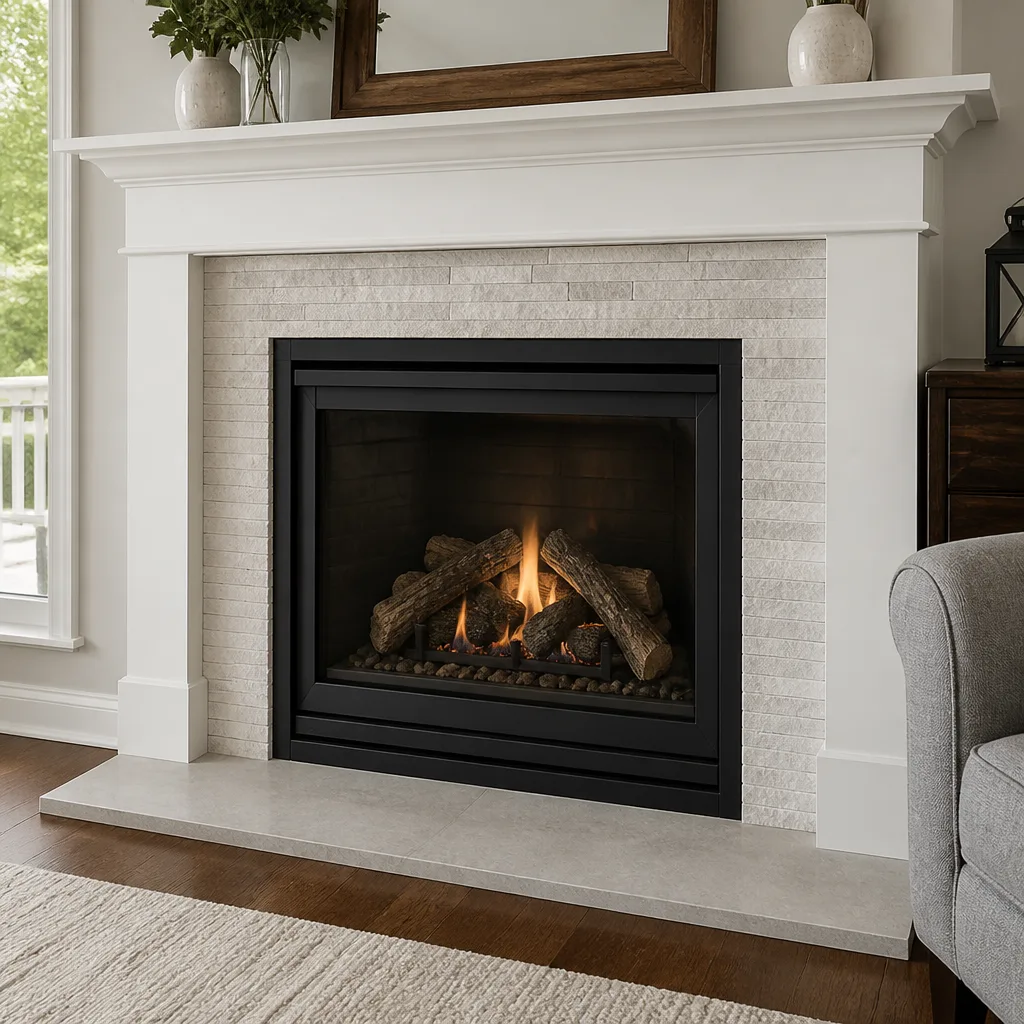 Gas fireplace service
Level 1 sweep and inspection to the NFPA 211 annual standard - flue, crown, cap, and flashing checked and photographed
Chimney sweep logs do not sweep chimneys. They loosen some creosote - which then falls where a brush and vacuum still have to collect it.
Chimney Cleaning Emergency Preparedness Guide for Minneapolis Homes
Most Minneapolis homeowners have a plan for the winter problems they can see coming: burst pipes, dead furnaces, power lines down in an ice storm. Very few have a plan for the one event that can turn a cold January night into an evacuation. A chimney fire or a carbon monoxide spike doesn’t politely wait for morning, and in a Minneapolis winter you can’t simply throw open the windows and wait outside while you sort out what to do. The house has to be secured, the fire department has to be called or not called, and the appliance has to be shut down, all while the thermometer reads minus ten. This guide walks you through what a chimney emergency actually looks like, how to respond in the first five minutes, why carbon monoxide risk climbs in Minneapolis winters specifically, and what has to happen before you light that fire again.
Quick Answer
A chimney emergency in Minneapolis usually means one of two things: a chimney fire in progress, or a carbon monoxide event traced to a blocked, cracked, or backdrafting flue. If you suspect a chimney fire, call 911, get everyone out, and close the firebox door and damper if you can do it safely. After any chimney fire, the flue must be inspected with a camera before the appliance is used again, because a fire can crack a clay tile or warp a liner in ways you cannot see from the firebox. Call (844) 834-2087. We answer 24/7. Fast dispatch from 7am to 7pm, Sunday through Friday.
Styles & brands we work with
- Sweep & inspection
- Caps & crowns
- Flue relining
- Masonry repair
- Gas fireplace service
Table of Contents
- How Do You Know a Chimney Fire Is Happening Right Now?
- What Are the First Five Minutes of a Chimney Emergency?
- Why Does Carbon Monoxide Risk Spike in Minneapolis Winters?
- What Has to Happen After a Chimney Fire Before You Burn Again?
- What Belongs in a Chimney Emergency Kit?
- How Do You Find Emergency Chimney Service in the Twin Cities in December?
- How Do You Prevent the Emergency in the First Place?
How Do You Know a Chimney Fire Is Happening Right Now?
A chimney fire is not always the roaring, roaring-up-the-flue spectacle people picture. Many are slow and quiet, burning inside the flue for twenty minutes or more with nothing visible from the living room. That’s the dangerous version, because the homeowner keeps feeding the fire and never realizes the flue is overheating. The signs fall into three groups, and knowing them ahead of time is the whole point of this section.
What you might hear
- A low rumble or roaring sound from the chimney, like a distant freight train or a generator running
- Popping, cracking, or a series of small tapping sounds that continue after you’ve stopped adding wood
- A rushing or whooshing noise that gets louder when the fire is hottest
What you might smell
- A strong, hot, acrid smell that is sharper than normal wood smoke
- A burning-plastic or chemical odor, which can mean creosote is igniting or a liner component is overheating
- Smoke smell inside the house even with the damper open, which points to a draft or blockage problem
What you might see
- Dense smoke or sparks coming from the top of the chimney
- Discolored or glowing metal on a prefab chimney, or heat shimmer above the cap
- Puffy, billowing smoke from the firebox that doesn’t clear the way it normally does
If two or more of these show up together, treat it as a chimney fire until a professional tells you otherwise. In our experience, homeowners who second-guess the roaring sound and wait ten minutes are the ones who end up with a cracked flue tile and a much bigger repair. The chimney flue is an engineered system, and creosote ignition is exactly the failure that system is built to withstand only if the flue itself is sound.
What Are the First Five Minutes of a Chimney Emergency?
The first five minutes matter more than anything that comes after. The numbered sequence below is what we want every Minneapolis homeowner to have memorized before the season starts, because during the event there’s no time to look it up.
- Get people out first. Everyone leaves the house, including pets. Call 911 from outside or from a neighbor’s phone. Don’t wait to confirm the fire before calling; a false alarm costs nothing.
- Close the firebox door and the damper. If you can do this without opening a hot door or reaching into smoke, closing the glass door and the damper starves the fire of the air it’s using. Don’t do this if it means standing in smoke or touching a glowing handle.
- Don’t throw water on it. Water on a hot firebox or a fireclay-lined insert can crack the masonry or the liner. Let the fire department handle the fire itself.
- Shut off the gas or oil appliance if the chimney serves one. If your fireplace or the connected flue serves a furnace, boiler, or gas log set, turn that appliance off at the thermostat or its switch.
- Watch the roof from a safe distance. Sparks or burning creosote falling onto a snowy or icy roof can start a secondary fire. Note what you see so you can tell the fire department.
- Don’t re-enter until cleared. After the fire department says the house is safe, the chimney itself still needs a professional assessment before the next fire. That’s a separate step from the fire being out.
A small, contained chimney fire that burns itself out still counts as a chimney fire. The damage is done inside the flue, and the flue doesn’t heal. Treating a “small one” as a non-event is the single most common mistake we see in Minneapolis homes with older masonry chimneys.
Why Does Carbon Monoxide Risk Spike in Minneapolis Winters?
Carbon monoxide is the quiet partner to every chimney problem, and Minneapolis winters create the exact conditions that push it into living space. The mechanism is backdrafting, also called spillage: instead of leaving through the chimney, combustion gases are pulled back down the flue and into the room. Several things make that more likely here than in a mild climate.
House pressurization from exhaust fans
A running bathroom fan, a kitchen range hood, a clothes dryer, or a central vacuum all move air out of a house. In a tightly weatherized Minneapolis home during a cold snap, that air has to come back in from somewhere, and the easiest path is often down the furnace flue or the fireplace chimney. The result is a negative pressure situation that can pull carbon monoxide straight into the living space.
Tight weatherization
Homeowners who upgrade attic insulation, seal rim joists, or install new windows reduce the natural air exchange that used to make a house “leaky.” That’s good for energy bills, but it changes how the chimney drafts. A flue that worked fine five winters ago can start spilling after a weatherization project. If your house was tightened up recently, the chimney system deserves a fresh look before the heating season.
Cold snaps and temperature inversions
On the coldest Minneapolis nights, the temperature difference between the warm flue and cold outside air is huge, which usually improves draft. But an inversion layer can trap exhaust close to the roofline, and a snow-loaded or iced-over flue cap can cut the draft off entirely. A cap packed with snow is a real winter hazard here, not a hypothetical one.
The practical defense is a carbon monoxide detector on every level and in every sleeping area, placed so it will actually wake someone. A CO detector near the fireplace or the furnace flue termination is smart, but it doesn’t replace the ones in the bedrooms. Test them before the season, and swap the batteries when you change the clocks.
What Has to Happen After a Chimney Fire Before You Burn Again?
No one should light a fire in a chimney that has just had a fire until the flue has been inspected and cleared. That includes the homeowner, and it includes any contractor who wants to “just take a look” and tell you it’s fine. The only way to know the flue survived is a camera assessment of the full length of the liner.
Why visual inspection from the firebox isn’t enough
Chimney fires do their damage high up the flue, well above anything a flashlight can reach from the firebox. A clay tile can crack at a joint forty feet up, and a flexible stainless liner can develop a split at a bend. Neither is visible from below. A camera run through the entire flue shows you exactly what happened, and the photo or video record gives you something concrete to work from.
The inspection, then the decision
After the camera assessment, the conversation usually lands in one of three places:
- Sound flue, clean it and return to service. Sometimes the fire was small and the liner held. A proper sweep removes the glazed creosote the fire left behind.
- Repairable liner. Cracks or gaps in a clay flue can often be restored with ceramic resurfacing, which extends the life of the flue without tearing out the old liner.
- Full relining. If the liner is warped, split, or the wrong size or type for the appliance, a new flexible stainless liner is the fix.
We inspect before we recommend, and we don’t recommend a full relining unless the camera shows why. That’s the standard we hold ourselves to, and it’s the standard you should ask for from any chimney company. If someone tells you the flue is toast without showing you the footage, get a second opinion.
What Belongs in a Chimney Emergency Kit?
You already have a winter kit with flashlights and blankets. The chimney emergency kit is a separate, small collection of items that live where you can find them in the dark. None of it is expensive, and all of it is useless if it’s buried in the garage.
The physical kit
- A working carbon monoxide detector on each level, plus a spare battery pack
- At least one rated fire extinguisher within reach of the fireplace
- A flashlight, kept somewhere you can find without turning on the lights
- A phone charger and a landline or charged cell for the 911 call
- A pair of leather gloves and safety glasses, for the moments you might need to close a damper or move a screen
- A notebook or your phone’s camera to record what you see for the fire department and the chimney company
The information kit
Know where your damper handle is, how it operates, and whether it’s a top-mount or a throat damper. Some dampers are cable-operated and the cable can seize during summer disuse; test it in the fall before you need it. Know which appliance each flue serves, and know where the gas shutoff is if your fireplace runs on gas. Draw a simple diagram of your chimney and keep it with the kit. It sounds fussy until the night you’re standing outside at two in the morning and the fire department asks which flue serves what.
Check the flue cap condition before the season. A cap packed with snow, iced over, or clogged with a bird’s nest is one of the most common causes of a winter draft failure in Minneapolis. A camera inspection before the burning season catches this before it becomes a problem. If the cap itself is damaged or the wrong style for your flue, product lines like Olympia Chimney and Famco cover the termination and draft-cure side of the system, and that matters as much as the liner inside.
How Do You Find Emergency Chimney Service in the Twin Cities in December?
Finding help in December is harder than it should be, because the busy season is the same season your emergency happens. Most chimney companies are booked weeks out by the time the first hard freeze hits. That means a chimney emergency in Minneapolis in December often means a choice between waiting for a scheduled appointment and finding a company that can respond to a genuine safety situation. Knowing what to verify before someone comes out protects you in both cases.
What to verify before anyone gets on your roof
- Ask what they’ll actually do. A real assessment includes a camera run of the full flue, not just a look from the firebox. Ask to see the footage.
- Ask what they’re authorized to work with. Liner systems are not interchangeable. A company that works with professional-grade brands like Copperfield or DuraFlex can install what your flue actually needs, and will tell you when the job calls for a specific product class.
- Ask for a written estimate before any work starts. The price is set per job by the written estimate, and a repair should never proceed on a verbal “ballpark.”
- Check the credentials they’ll cite. Ask about licensing and insurance, and ask whether their inspection work follows NFPA 211, the standard insurance companies and home buyers reference at closing. If they can’t explain the standard in plain language, keep looking.
- Watch the safety on the roof. December ice on Minneapolis roofs is a real hazard, and a company that sends someone up a slick roof without the right fall protection is a liability to you as well as to themselves.
- Ask about the repair that follows. A company that can sweep, inspect, and repair with the same crew avoids the handoff where one company diagnoses and another repairs. That continuity is worth asking about directly.
If you call us outside dispatch hours, we answer 24/7. A call outside dispatch hours is booked into the next opening, Sunday through Friday, 7am to 7pm. We won’t tell you we’ll be there in ten minutes if we won’t. We will tell you exactly what to do while you wait.
How Do You Prevent the Emergency in the First Place?
Every chimney emergency we’ve seen in Minneapolis started as a maintenance gap. Creosote builds up with every fire, and the glazed, tar-like form is the one that fuels a chimney fire. Annual sweeping removes it before it becomes fuel. That’s the unglamorous core of preparedness: not the emergency response, but the sweep you book in September so you never need the response.
The pre-season checklist
- Book a sweep and inspection before burning season. Early fall is the calm before the winter rush. Late August and September appointments are the easiest to get.
- Have the flue inspected with a camera, not just swept. A sweep removes creosote; an inspection tells you whether the liner still has integrity and whether the whole system is sized correctly for the appliance.
- Test the CO detectors. Every level, every bedroom, fresh batteries.
- Check the damper and the cap. Both need to operate smoothly before the first fire. A seized damper or a clogged cap are two of the most common winter failures.
- Burn seasoned firewood. Wet wood makes more creosote. That’s the whole story.
- Look at the mortar and the crown. A cracked crown lets water into the masonry, and freeze-thaw cycles in Minneapolis turn that into a bigger repair every winter.
Repairs done right are built to last between visits, not recurring patches. If a crown is cracked or a cap is wrong for the flue, fixing it now saves you the emergency visit in February. HeatShield ceramic resurfacing is one example: it restores a liner that has cracks without a full tear-out, when the condition calls for it.
You can read more about the full range of services at Northwind Chimney Sweep, or jump straight to scheduling a chimney sweep. If you’re already seeing signs of damage, our chimney repair page explains what a typical repair involves. We work across Minneapolis and the neighborhoods around it.
Common Mistakes to Avoid
- Waiting to confirm a chimney fire before calling 911. A false alarm is free. A delayed call can cost the house. If you hear the roaring and smell the acrid smoke, call.
- Burning again after a fire without a camera inspection. The fire department putting out the fire is not the same as the flue being safe. A camera run of the full flue is the only way to know the liner survived, and no one should clear a system without it.
- Assuming a “small” chimney fire was harmless. Small fires still crack clay tiles and warp liners. The quiet ones are often the ones that do the most hidden damage.
- Skipping the sweep because the fire “worked fine last year.” A chimney doesn’t announce its creosote load. Glazed creosote builds quietly and ignites without warning, and a Minneapolis winter gives it plenty of chances.
- Ignoring changes in how the fireplace drafts after weatherization. New windows, added insulation, and air-sealing change the pressure balance in the house. If the fire started smoking after the house was tightened up, the chimney is telling you something.
- Letting anyone on the roof in December without asking about fall protection. Ice on a Minneapolis roof is a real hazard, and a company that doesn’t take it seriously is one that hasn’t thought the job through.
- Trusting a verbal clearance over a written estimate and a photo record. Ask for the camera footage and the written estimate before any repair begins. The camera evidence is your protection against being sold work you don’t need.
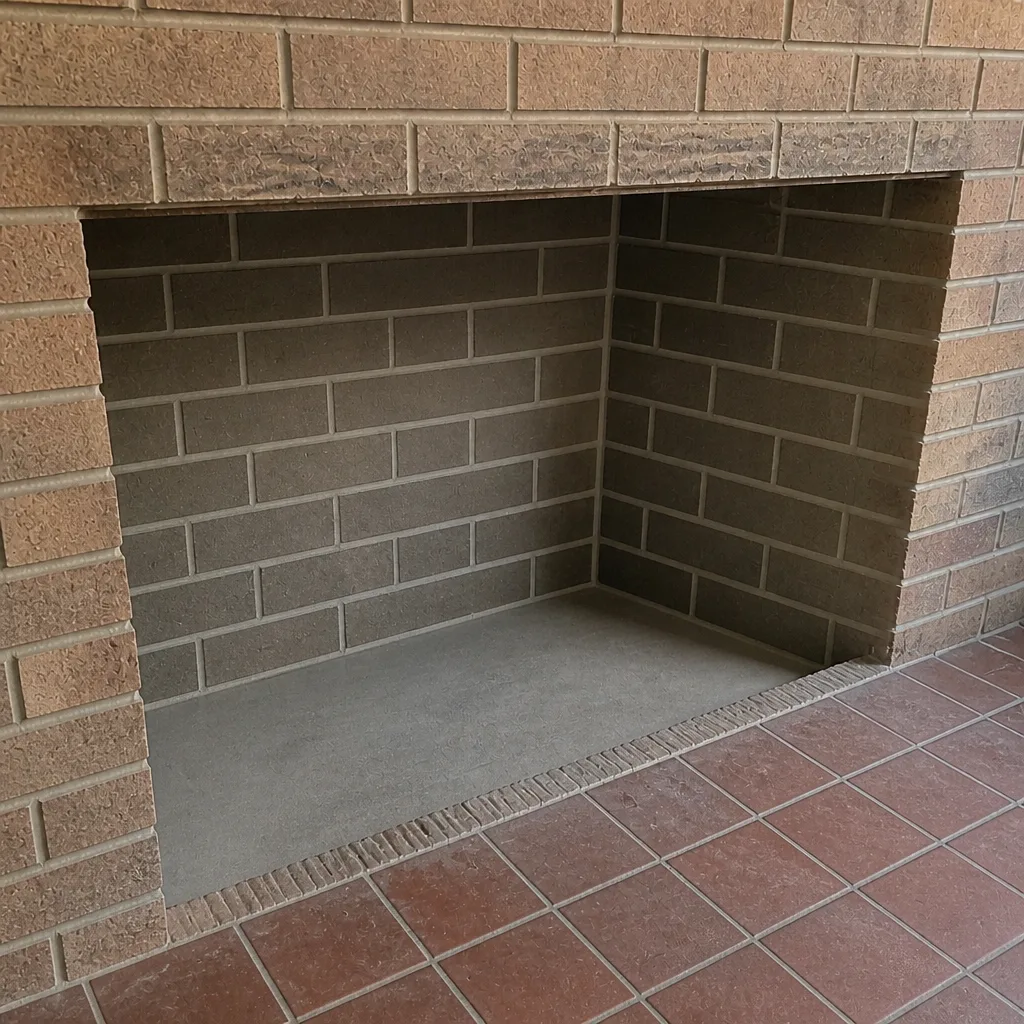
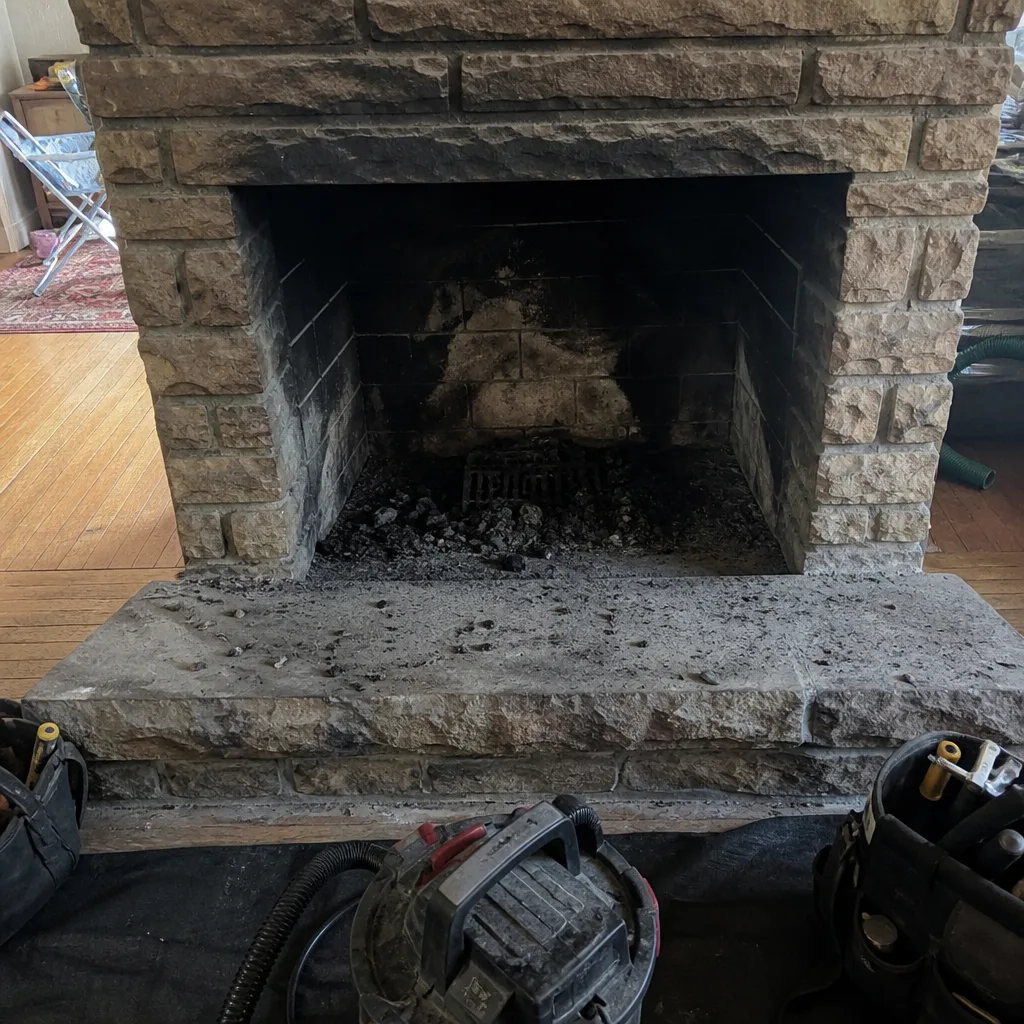
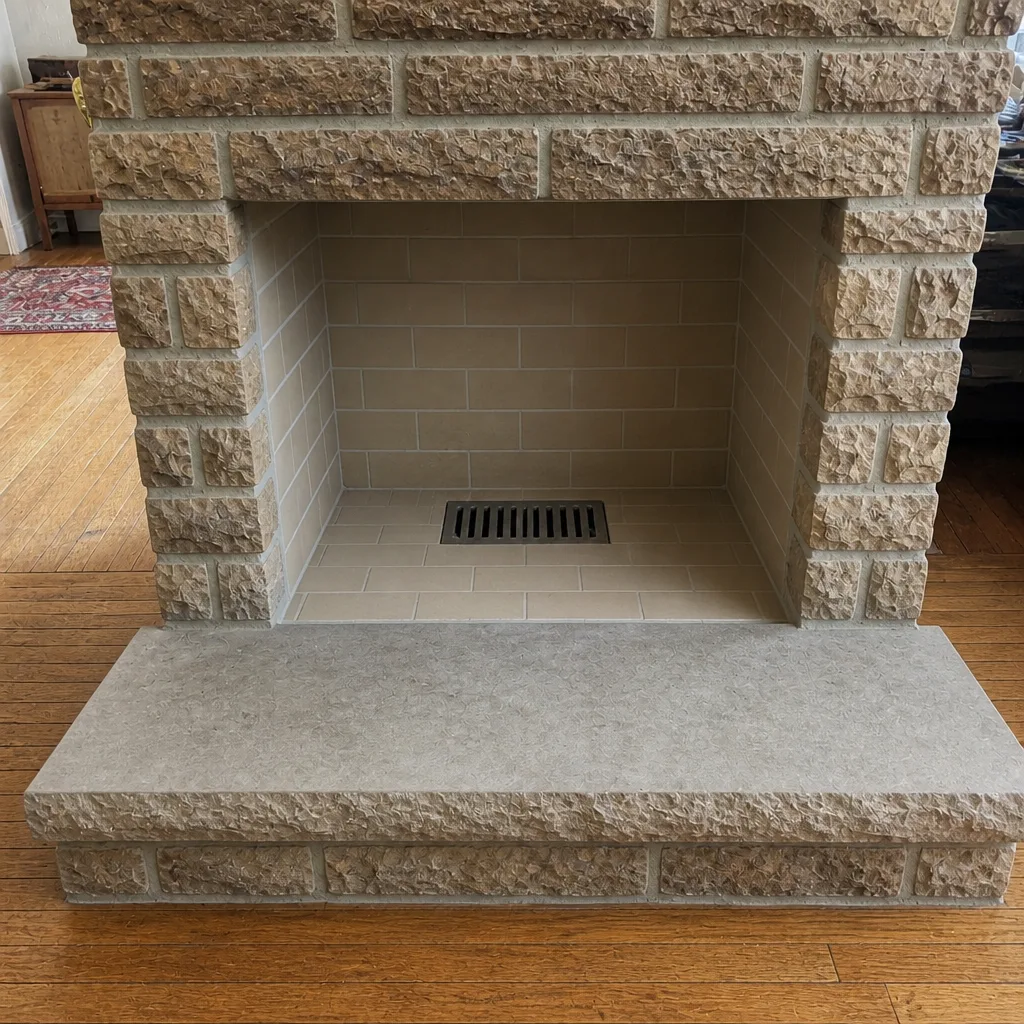
See the difference
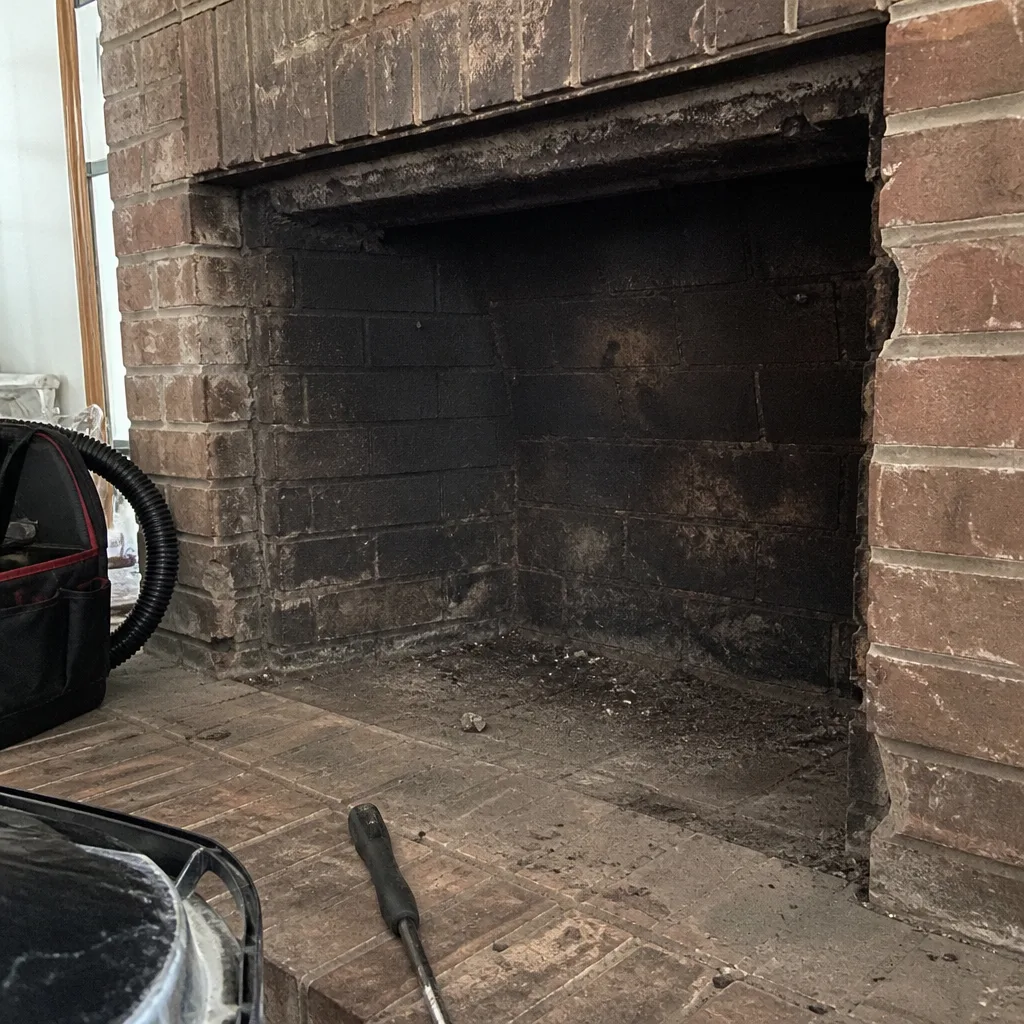 Before
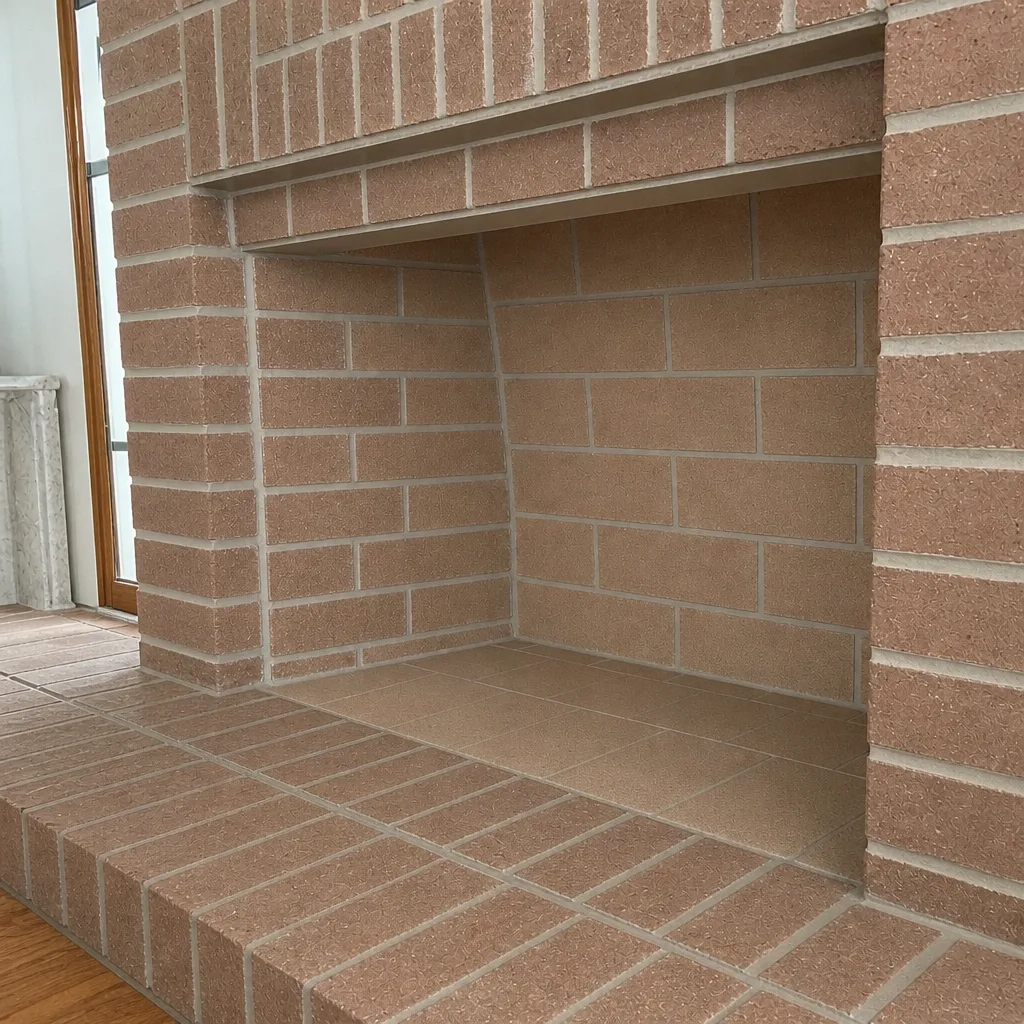 After
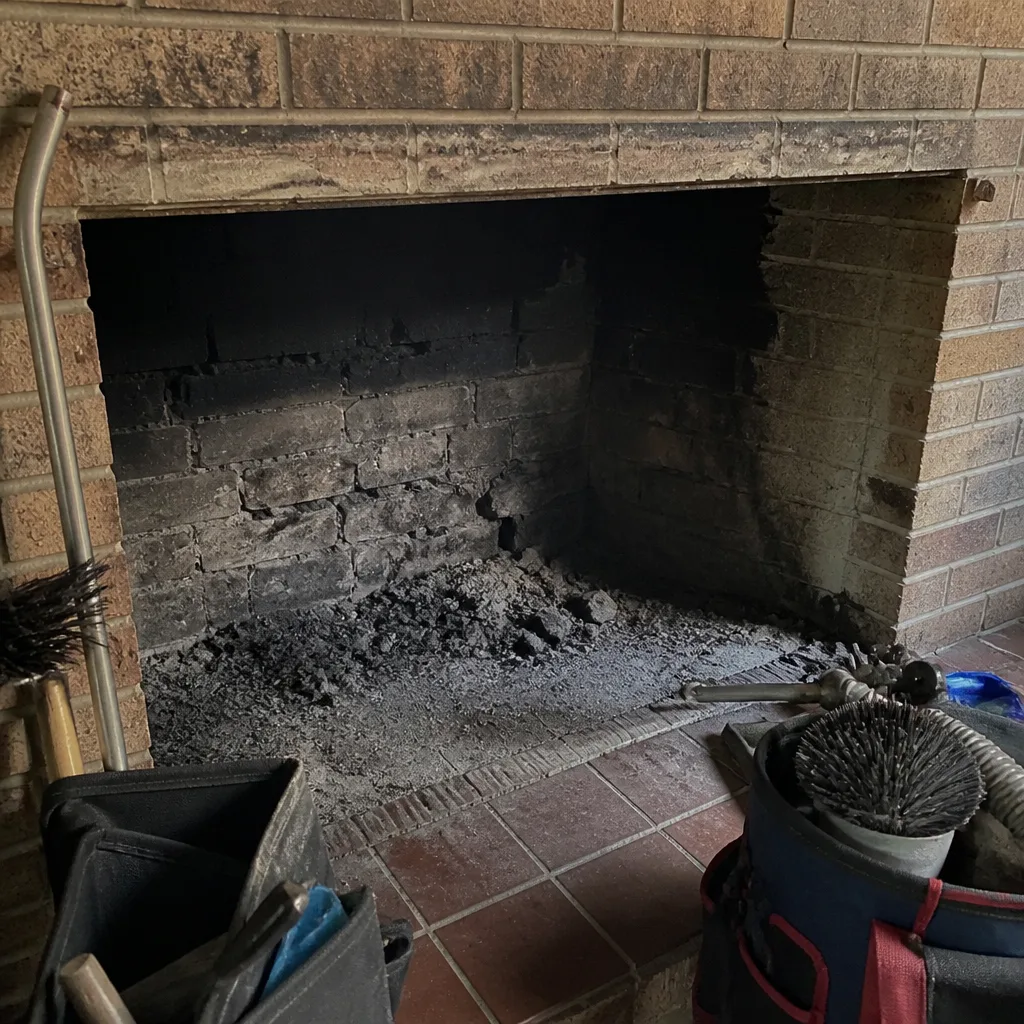 Before
 After
 Before
 After
When to Call a Professional
Call a professional if you’ve had any chimney fire, even a small one you think burned out on its own. Call if your CO detector has gone off, if smoke backs into the room when you open the damper, if you smell a strong creosote odor on warm days, or if you can see cracked mortar, a damaged crown, or a loose cap. Call before the first fire of the season if the chimney hasn’t been swept in the last year, and call before you light the fireplace in a home you just bought. Northwind Chimney Sweep offers free estimates in Minneapolis and can be reached at (844) 834-2087. We answer 24/7. Fast dispatch from 7am to 7pm, Sunday through Friday.
Frequently Asked Questions
The reliable signs are the sounds and smells: a roaring or rumbling noise from the flue, popping or tapping that continues after you stop adding wood, and a sharp acrid smell that’s harsher than normal smoke. Visible smoke or sparks from the top of the chimney confirm it. A quiet chimney fire can burn for twenty minutes with almost no exterior sign, which is why any suspected fire deserves a professional camera inspection before you burn again. Call (844) 834-2087 for a free estimate on the inspection.
No. The flue needs a camera inspection first, because the damage from a chimney fire happens high up the liner where you can’t see it from the firebox. A cracked clay tile or a warped stainless liner is invisible from below and unsafe to burn in. Once the camera confirms the flue survived, a sweep removes the glazed creosote the fire left behind and you can return to normal use. Call (844) 834-2087 to schedule the inspection.
Two reasons: the house is sealed against the cold, and the exhaust fans and heating appliances run more. A tightly weatherized Minneapolis home under negative pressure can pull flue gases back down the chimney instead of up and out. Cold weather also means snow and ice can clog a flue cap and cut off the draft entirely. The defense is a CO detector on every level and in every bedroom, plus a pre-season inspection that verifies the flue is drafting properly. Call (844) 834-2087 for an inspection.
Yes, if you burn wood regularly. Creosote accumulates with every fire, and the annual sweep plus inspection is the only reliable way to know how much is there and whether the liner is still sound. Skipping a year lets glazed creosote build into the range that fuels a chimney fire. A gas fireplace needs inspection less often but still benefits from a periodic check of the venting and termination. Call (844) 834-2087 for a free estimate.
Creosote keeps building, and the glazed form ignites at a much lower temperature than people expect. The bigger risk is that a cracked liner or a failing cap goes unnoticed until it fails during the coldest week of the year, when a chimney fire or a CO event is the result. The inspection is cheap compared to the repair it prevents. Call (844) 834-2087 and we’ll give you an honest read on what your chimney actually needs.
Ask what they’ll actually do before anyone comes out. A reputable company will run a camera through the full flue, show you the footage, and give you a written estimate before starting work. Ask what liner brands they’re authorized to work with, whether their inspection follows NFPA 211, and how they handle roof safety in icy conditions. If they can’t answer those questions plainly, keep looking. Call (844) 834-2087 for a free estimate in Minneapolis.
Open the damper fully and check that it’s actually open; a seized or partially closed damper is the most common cause. If the smoke continues, put the fire out by closing the glass doors and the damper, get everyone out, and call the fire department if you see or smell anything that suggests a fire in the flue. Once the house is safe, the chimney needs an inspection to find out whether the problem is a blockage, a draft issue, or a damaged liner. Call (844) 834-2087 for an inspection.
The Bottom Line
Chimney emergency preparedness in Minneapolis comes down to knowing the signs, having a response sequence memorized, and never burning again after a fire without a camera inspection. The CO risk is real in a tight, cold-weather house, and the detector placement matters as much as the chimney itself. Most of the emergencies we see started as a skipped sweep or an unexamined cap, which means most of them were preventable. Book the sweep and inspection before the season, keep the kit where you can find it, and if something goes wrong, call. Northwind Chimney Sweep offers free estimates in Minneapolis. Call (844) 834-2087. We answer 24/7. Fast dispatch from 7am to 7pm, Sunday through Friday.
Written by the team at Northwind Chimney Sweep.