
DuraFlex Chimney Sweep in Minneapolis: A Homeowner’s Guide
Most homeowners hear they need a “flex liner” and never learn there are multiple alloy grades, two thickness specs, and application rules that decide whether that liner lasts for decades or starts corroding within a few winters. The product matters, but the fit and sizing matter more. This guide covers what DuraFlex actually is, when it’s the right call for a Minneapolis flue, and the questions to ask before anyone lowers a liner into your chimney.
What makes DuraFlex different from a generic flexible liner?
DuraFlex is a flexible stainless steel relining system, and the difference from a hardware-store liner is in the metallurgy and the testing. The most common confusion is alloy grade. A 304-grade stainless liner is fine for a wood-burning appliance under steady conditions, but it has less resistance to the acidic condensate that forms when flue gases cool. A 316Ti liner carries titanium for better chloride and acid resistance, which matters in a heating climate where a flue spends part of every burn cycle warming up and cooling down.
Wall thickness is the second spec that gets skipped. Thinner walls can kink on the way down an offset flue and thin out further at the bend, which is exactly where a liner fails first. Thicker-walled product holds its shape better through the pull and the transition.
Listing certifications are the third. A properly listed liner system carries a listing that your insurance company and a code inspector can reference. In Minnesota, where a reline often comes up at a home sale or after a failed inspection, an unlisted liner is a problem that can follow the house. Ask for the listing documentation before anything goes down the flue.
When is DuraFlex the right liner for a Minneapolis chimney?
DuraFlex earns its place in specific situations, not every one. It’s the correct call when the flue shape or path makes a rigid liner impractical:
- Offset flues. Older masonry chimneys often jog around a structural obstruction. A flexible liner can be worked through that offset where a rigid section cannot.
- Irregular or deteriorating masonry. Flues that were never perfectly square, or that have spalled over many freeze-thaw cycles, rarely accept a rigid liner cleanly.
- Gas appliance conversions. When a wood fireplace is converted to a gas appliance, the flue needs a correctly sized liner rated for the new appliance’s venting and condensate. This is where alloy grade stops being academic.
- Full relining jobs. When the existing flue is unlined or the clay tile is cracked, a listed flexible system is often the cleanest path to a safe flue.
In our experience across Minneapolis, most of the relines that go wrong don’t fail on product choice. They fail because the liner was never sized to the appliance. DuraFlex in the right application, sized correctly, is a durable system. The same product, sized wrong, will underperform.
Why cold-climate thermal cycling makes liner selection more critical in Minneapolis
A chimney in a mild climate runs at a fairly steady temperature across the burn. A Minneapolis chimney does not. A fire gets lit into a cold flue, the flue heats and expands, the fire dies down, the flue cools, and the cycle repeats through the heating season. That expansion and contraction stresses every joint and every bend, and it drives condensation inside the flue as gases cool on the way up.
That condensate is acidic. It sits against the liner wall and attacks the alloy. A liner with better acid resistance and a thicker wall handles those cycles with more margin than a thin 304 product. This is why the alloy grade and thickness questions matter more in Minneapolis than they might in a warmer market.
Thermal cycling doesn’t just test the liner. It tests every component around it, which is why we look at the whole system rather than the pipe alone. Our Northwind Chimney Sweep team inspects before recommending anything, and in this climate that inspection has to account for how the flue behaves through a full winter, not just on the day of the sweep.
What does proper sizing have to do with liner lifespan?
A liner that’s too large for the appliance lets flue gases move too slowly. They cool before they exit, draft weakens, and condensate forms on the liner wall. A liner that’s too small chokes the appliance, which then smokes and burns inefficiently. Either error shortens the liner’s life and hurts how the fireplace performs, and neither shows up immediately. It shows up a few seasons in, when draft gets unreliable and the liner is already compromised.
Sizing starts with the appliance’s venting requirements, then the flue’s actual measured dimensions. It’s not a guess based on the fireplace opening. Getting it right is the difference between a system that performs for the long run and one that has to be redone. Northwind offers chimney repair for the problems that come from an incorrectly sized or poorly installed liner, and we’d rather size it right the first time.
What should a DuraFlex installation include beyond the liner?
The liner is one component. A complete installation includes the pieces that make the flue work as a system:
- A top plate. It seals the top of the chimney, keeps water and weather out, and holds the liner termination in place.
- Insulation wrap on exterior chase sections. On a chimney that runs up an exterior wall, an unwrapped liner cools fast and drafts poorly. Insulation keeps the flue gases warm enough to exit cleanly.
- A bottom connector. It ties the appliance to the liner, which is where many installs get casual and performance suffers.
- A draft cap or termination cap. This is where product knowledge like Gelco and Olympia Chimney components comes in. Most sweeps treat caps as aftermarket accessories. In a cold climate, the right termination is part of how the system breathes.
We also work with HeatShield ceramic resurfacing, which restores a liner that’s still structurally sound and can extend its life without full replacement. When that’s the right call, it saves the homeowner a larger job. We inspect before we recommend, so the answer comes from what the flue actually needs.
When to call a pro (and when it can wait)
A liner is not a homeowner project. Pulling a flexible liner down a flue involves the roof, the chimney top, and a system that has to be sealed and sized correctly. If you’re seeing smoke come back into the room, a chimney that drafts poorly, visible cracking in the flue, or a recent inspection that flagged an unlined or damaged flue, it’s time for a professional evaluation. If you’re just due for a routine sweep and nothing has flagged, a standard yearly visit is the right call and a reline may not be on the table at all.
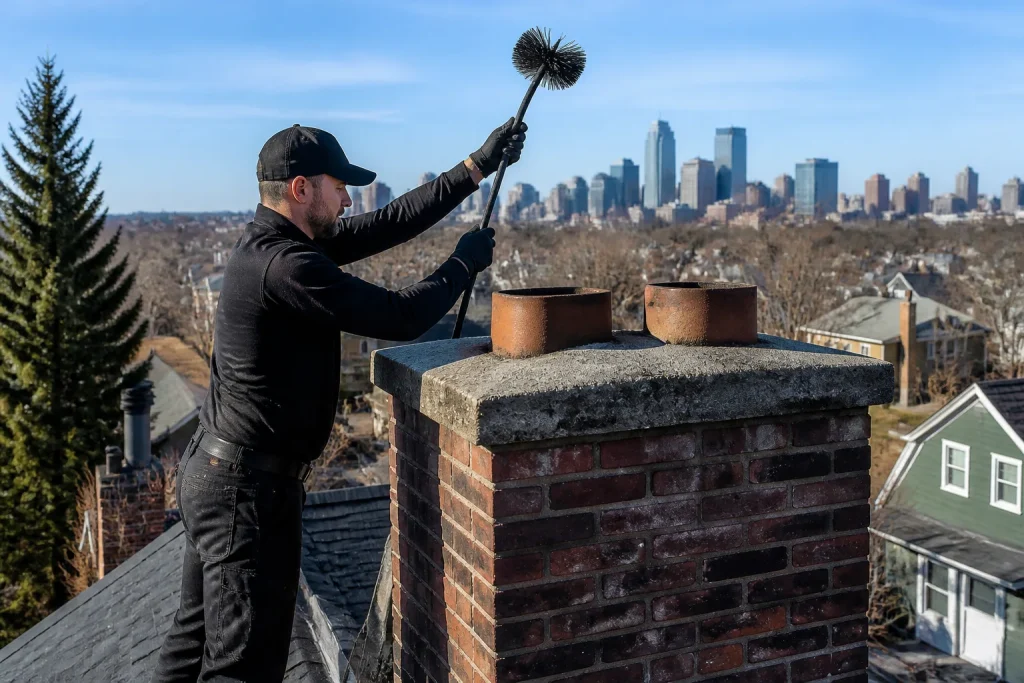
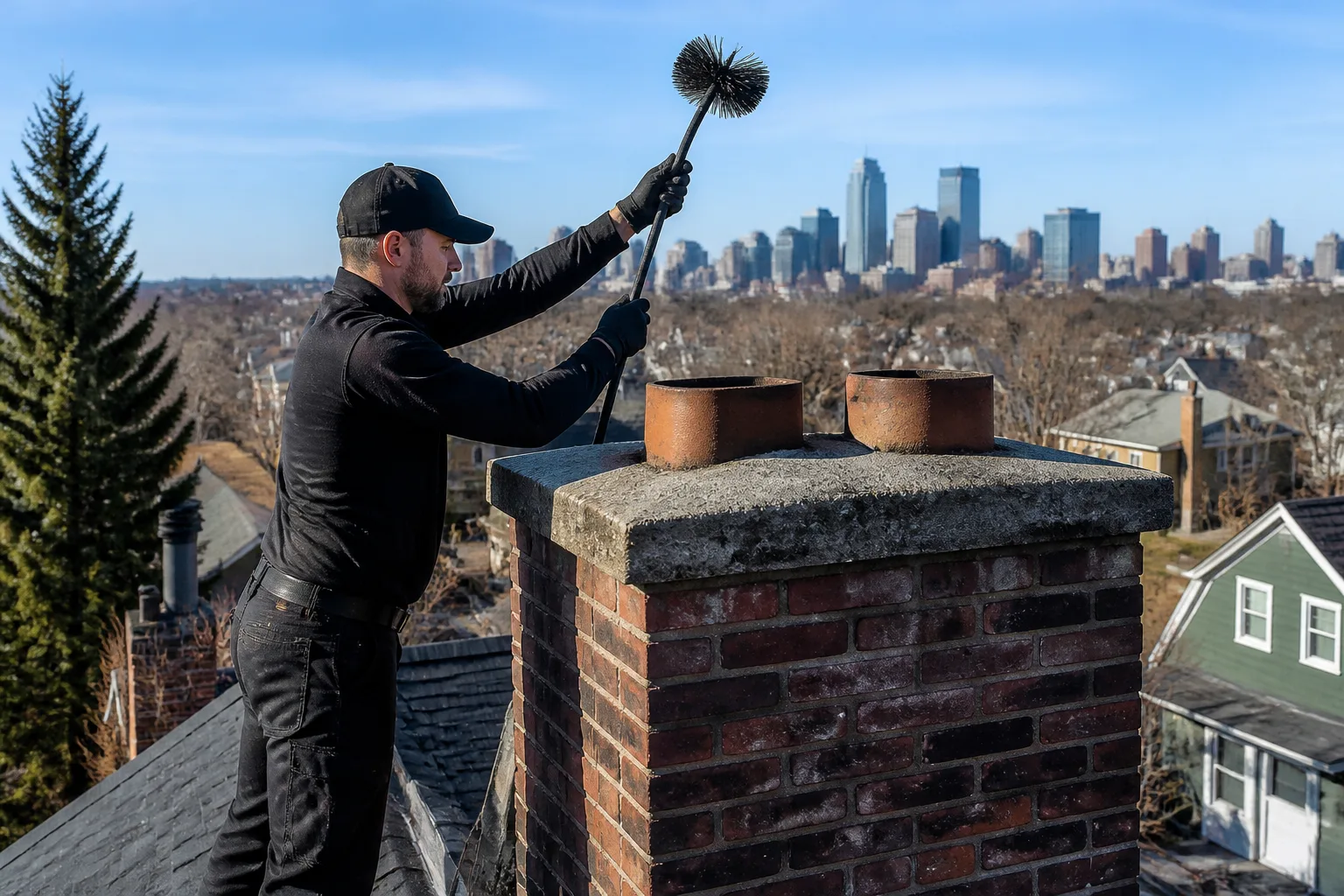
Related services in Minneapolis: chimney inspection, sweeping, and repair are all handled by the same team, so a diagnosis and a repair don’t get split between companies. If you’d rather not climb on your own roof to figure out what’s going on, chimney sweep service combined with a full inspection is the place to start. You can read more about the team on our Minneapolis page.
If you’re not sure whether you need a sweep, a repair, or a full reline, that’s the exact question an inspection answers. Nothing gets recommended here without evidence you can see for yourself from a camera inspection and photo report.
The Bottom Line
DuraFlex is a genuinely capable relining system, but it is not the answer to every flue problem, and the product is only part of the result. Alloy grade, wall thickness, listing certification, sizing to your appliance, and a complete installation with a top plate, insulation, connector, and proper termination are what make it hold up through a Minneapolis winter. Ask those questions before anyone starts the job, and ask for the listing documentation and a photo report you can verify. If you’re in Minneapolis and need help, Northwind Chimney Sweep offers free estimates. Call (844) 834-2087. We answer 24/7. Fast dispatch from 7am to 7pm, Sunday through Friday.
Frequently Asked Questions
You need one when your flue is unlined, the clay tile is cracked or spalling, the flue path has an offset that rules out a rigid liner, or you’ve converted to a gas appliance. An inspection with a camera confirms which of these applies. If the flue is sound and lined, you may not need a reline at all. Call (844) 834-2087 for an exact quote – estimates are free.
Yes, for exterior chase sections it usually does. An unwrapped liner in a cold chase cools flue gases before they exit, which weakens draft and creates condensate against the liner wall. Insulation keeps the flue warmer and helps the system perform through the winter. Whether your specific chimney needs it depends on its construction, which is a question for the inspection.
It depends on the appliance and the condensate exposure. A 304 liner is workable for some wood-burning setups, but 316Ti offers better acid resistance for gas conversions and for flues that see heavy thermal cycling. In a Minneapolis winter, the cycling is real, so the higher grade is worth discussing with whoever specifies your install. Ask for the spec in writing.
Once a year is the standard recommendation for a wood-burning fireplace in regular use, and it’s the best way to catch a liner problem early. A sweep and inspection together tell you whether the flue is still performing as it should. If you skip it and a liner degrades, you may not notice until draft fails or a home inspection flags it. Call (844) 834-2087 for an exact quote – estimates are free.
Written by the team at Northwind Chimney Sweep.
Need Chimney Cleaning Help?
Call Northwind Chimney Sweep - licensed & insured, with free written estimates in Minneapolis.
(844) 834-2087